20070905

Large Catechism 01

Part 1 - Of new birth

Q What is your name?
A Chanaeuel {God is gracious to us.
Benalleuell {Love wholly the Lord with the heart.

Q Who gave you this name?
A My godfathers and my godmothers who with my father brought me to the minister to be baptized and were especial witnesses of the same and sureties to God for me.

Q Why were you baptized?
A That I might be judged a as Christian, here amongst the professors of Christs name & be received to them as a member of Christ, the child of God, and an inheritor of the kingdom of heaven.

Q. Whereby may you now be certaine, that you are such an one indeed?
A. If I do what my godfathers and godmothers promised for me.

Publications 01

Apart from his translation of Terence, Bernard's first publication appears to have been a catechism as follows.
Title: A large catechisme following the order of the common authorized catechisme published for the vse of his Christian friends and welwillers, the inhabitants of Worsopp, Gainsborough, and Epworth by Richard Barnerd, Master of Artes and preacher of Gods Word.
Imprint: [Cambridge, England]: Printed by Iohn Legat, printer to the Vniuersitie of Cambridge ... and are to be sold at the signe of the Crowne in Pauls Churchyard by Simon Waterson, 1602.
Date: 1602
No. pages: [2], 68 [i.e. 70] p
Notes: Signatures, numerous errors in paging, imperfect: print show-through.
Copy from: Peterhouse (University of Cambridge) Library.
The catechism is in five parts and at the end there is 'A short explanation of the Lord's Prayer, Creed and ten Commandments and sacraments, to bee learned of the ruder sort, made into prayers' and some seven "psalms" (Ps 80 and others on the Queen's majesty, for knowledge of God's Word, for mercy and confession, to live well and on God's goodness to the upright).

20070710

Isle of Man Part 06

5. The fifth is called Custom; this old Sire patroniseth many vain and sinful practices. By this the Jews held it no sin in them to demand, and in Pilate to let loose to them, a wicked Barabbas, one worthy to die for insurrection and murder.
6. The sixth is a Popish fellow called Forefathers; he advanceth his ancestors and their worth, and thinketh so well of them that to imitate them is no sin. Thus the Samaritans justified their false worship.
7. The seventh is one Sir Power; he maketh ever that warrantable which Law establisheth, ordaineth and decreeth, nor doth he seek to alter it. Great and capital sins in the Romish Synagogue are thus countenanced.
8. The eighth is Sir Sampler, who produceth for patterns great and learned men's examples, as if they could not do amiss; but whatsoever they do or say, it must be good and lawful, and therefore imitable without sin.
9. The ninth is Sir Mostdo, who maintained sin from a general practice, because multitudes do it here, and there, and everywhere; and therefore is it no sin to do such a thing, which almost all, or the greatest part, do.
10. The tenth is one Sir Silly, one made all of good meaning, who will qualify the fact by thinking no harm, or intending well. Thus would Saul have justified his rebellion, and Abimelech excused his taking of Abraham's wife. And thus vain persons excuse their wanton communication, profane oaths, foolish jestings, and such like, saying, they mean no harm, they only make themselves merry. Thus Sir Silly is he that maketh simple souls plead good meaning for all their foolish superstition, blind devotions, and licentious merriments.
11. The eleventh is Vain Hope, who teacheth to put off the fault to some other, as Adam to Eve, and Eve to the Serpent, and to deny the fact, as Cain did, even to God himself, hereby hoping to shift off sin, and to escape punishment, who maketh God all of mercy to the exclusion of justice.
12. The twelfth is the Lord Presumption; he feareth not judgment, he blesseth himself in his evil ways, he maketh a covenant with Death, and a league with Hell, and suffers sin to be his daily guest, and will let the Hue and Cry pass along without any fear of peril, as nothing at all concerning him.
13. The thirteenth is Sir Wilful, hating to be reformed; this is an obstinate friend for Sin, who will wilfully defend it, and be careless of all reproofs. This fellow in contempt will tread down the Hue and Cry under his feet, and maintain Sin.
14. The fourteenth is Sir Saintlike, which under the show and shadow of piety, and pretended honesty, will cover much iniquity, and hide it for a time, that it be not taken by the pursuer with the Hue and Cry; such were the hypocritical Scribes and Pharisees. These great ones, and many other more, are the friends of this thief and rebel; hut yet for all these favourites, Godly Jealousy espies him out in his harbour, and presently goeth to a Justice of Peace to procure a warrant for the Constable to attach him, and all his companions with him. The Justice is not one of a mean rank, or any petty Justice, but the very Lord Chief Justice of Heaven and Earth, the Lord Jesus; for it is he that can give the warrant to attach sin, no other warrant will sin obey. The warrant is the power of God's Word. The form of which warrant is, to search out and attach sin with all his associates, and to bring him and them before authority, to answer to such things as shall be objected against them in his Majesty the King of Heaven's behalf. The procuring of this warrant is by going unto and conferring with some of the Lord Chief Justice's Secretaries, the Writers of Holy Scriptures, setting down this charge, as Jeremiah doth, (Chapter 5) to search and try our ways.

20070430

Isle of Man Part 05

The shifts which commonly a thief maketh to escape in his flying away, are two:
1. There is his counterfeiting the habits of an honest man; so Sin craftily putteth upon himself the show of virtue, - Jehu did piety, for the getting of a kingdom, and establishing of it to himself; whose sin was covered with a pretended and hypocritical zeal for the Lord. Ananias and Sapphira made show of liberality like that of Barnabas, not discernible till Peter discovered it. For as Satan can transform himself into an Angel of light, and his Apostles into the Apostles of Christ; so can Sin, the seed of Satan, put upon itself the counterfeit of virtue.
2. A thief will alter his name, and by assuming the name of an honest man oftentimes escape away; and after this manner also eseapeth sin, vice getting upon it the name of virtue. And so Drunkenness escapeth under the name of Good Fellowship; Covetousness under the name of Good Husbandry; Filthy Ribaldry under the name of the name of Merriment; Pride of Apparel under the name of Decency and Handsomeness; Bloody Revenge for wrongs offered, escapes under the name of Valour; Foolish Wastefulness under the name of a Frank and Liberal Disposition; Superstition under the name of Devotion to Forefathers and the Old Religion; Remissness in punishing under the name of Gentleness; warmness in Religion under the praise of Discretion; and many such like foul vices do thus deceitfully hide themselves, and so escape unattached.
If by these his shifts he cannot escape Godly Jealousy, that constant pursuer, then will he seek to be holpen by his kindred and friends; for sin hath many, who will either so defend him, or excuse him, or deny him or hide him; or make him so little in fault as will almost persuade Godly Jealousy that it is even needless so eagerly to pursue after him.
1. The first of these is his grandsire Ignorance; for he knows no sin, he cannot read the Hue and Cry; he breedeth Sin, and bringeth him up, and maketh no conscience of it; if Sin get into his house he holds himself safe enough.
2. The second his brother Error the son of Ignorance; this fellow mistaketh all, and misconstrueth the whole Hue and Cry, and can find no fault with Sin, and so endeavoureth to send the pursuer another way.
3. The third is his cousin Opinion, and this will hold the pursuer with a long and tedious disputation, questioning the act, whether it be a sin or no, and will endeavour by probabilities to make it no sin, that so he might make the pursuer to desist. Thus sins of profit and such as may prevent certain dangers are disputed pro and con as men say. The sin of Usury by many is brought under Opinion as lawful some way. So the sin of Idolatry - (as it was disputed in Queen Mary’s days,) - to go and hear a mass without inward reverence in order to prevent the imminent penalty of death. Many sins evident enough are made disputable if the yield profit or be delightsome to the flesh or such as may help to keep a man’s person or state in safety; for all these Opinion will be a proctor.
4. The fourth is one Master Subtlety, his wit being attended on by little conscience of the truth. This man cometh with his distinctions to clear an act from sin thus with his latria and doulia he will have idolatry no idolatry: so with his biting and not biting, and lending to the rich upon use but not to a needy brother, usury must be no sin. This Subtlety of wit with a chivalrous conscience maketh foul sins to pass along as no sins.

20070311

The Puritans


The Oxford English Dictionary suggests that the word Puritan came into fashion around 1556 in Queen Mary’s reign. (Mary lived 1516-1558. She succeeded 1553.) Cf the relevant article on English Dissenters here. Church historian Thomas Fuller apparently wanted the word Puritan banned so imprecise did he consider it.
Carl Trueman is not the first to have observed that the word ‘has proved notoriously difficult to define.’ He says, helpfully, that ‘it remains true to say that it is easier to give examples of Puritans than give a precise and fully adequate definition of Puritanism’.(C R Trueman, The Claims of Truth; John Owen’s Trinitarian Theology Carlisle: Paternoster Press, 1998, 9). More analytically Jim Packer says ‘Puritan was an imprecise term of contemptuous abuse which between 1564 and 1642’ that applied, he says, to at least five overlapping groups.
1. Clergy, who ‘scrupled some Prayer Book ceremonies and phrasing’.
2. Those who wanted the Presbyterian reforms advocated by Thomas Cartwright (1535-1603) and the 1572 Admonition to the parliament.
3. All who ‘practised a serious Calvinistic piety’.
4. Rigid Calvinists who applauded the Synod of Dort, ‘called doctrinal Puritans by other Anglicans who did not’.
5. MPs, JPs and other gentry who ‘showed public respect for the things of God, England’s laws and her subjects’ rights’.
(Jim Packer, Quest for godliness, 35). Cartwright was a popular Cambridge preacher whose lectures on Acts, 1569-1571 had a big an impact on some eager for further ecclesiastical reform. Deprived of his fellowship he moved to the continent. The Admonition was probably by John Field (1545-1588) and Thomas Wilcox (1549-1608). London based Cartwright disciples were imprisoned for it. It was disliked by moderate Puritans eg John Foxe (1516-1587), Thomas Lever (1521-1577).
The Synod of Dort, a Reformation milestone and the source of the Canons of Dort (the 5 Points of Calvinism) was an international conference in Dort or Dordt (Dordrecht) Nov 1618-May 1619 called to settle controversy in the Dutch Reformed Church over teaching linked to Jacob Arminius (1560-1609) and promoted by Franciscus Gomarus (1563-1641), etc. Ames, Lancelot Andrewes (1555-1626), John Davenant (1576-1641), Joseph Hall (1574-1657), Samuel Ward (1572-1643) attended. See here.)
In an essay on the subject Peter Lake pinpoints three positions regarding the question in recent historiography. (Peter Lake. ‘Defining Puritanism – again?’, Francis J Bremer ed. Puritanism: Transatlantic Perspectives Boston: Massachusetts Historical Society, 1993, 3-29).
First, Puritanism was a movement committed to further reformation in the church’s government or liturgy. In Intellectual origins of the English Revolution revisited Christopher Hill confined the word Puritan to ‘all those radical Protestants who wanted to reform the Church but (before 1640 at least) did not want to separate from it.' (Christopher Hill, Intellectual origins of the English Revolution revisited Oxford: Clarendon, 1997, 25, 26). The unlikelihood of a restructuring of the Church of England no doubt helped such to focus on reforming pastoral care within established structures.
Second, Puritanism was ‘a style of piety, an emotional and ideological style’. Dr Lloyd-Jones, for example, also argued that Puritanism goes back at least as far as the English Reformer William Tyndale (1495-1536) and is an attitude of mind and heart (D M Lloyd-Jones, The Puritans: their origins and successors, Edinburgh: Banner of Truth, 1981, 240). He calls Knox the first Puritan (ibid, 260). Cf Knappen; Everett Emerson, English Puritanism From John Hooper to John Milton (Durham: Duke UP, 1968). Geoffrey Nuttall, The Puritan Spirit, London: Epworth Press, 1967, 11, similarly speaks of ‘ … that spirit in religion which has driven men at all times to seek a purer way of life’. Christopher Hill is not far from that with ‘a philosophy of life, an attitude to the universe, … not in the narrow sense restricted to religion and morals …’ (Hill, Intellectual origins, 260, 261)
Those taking this second position either ‘seek a core of definitively Puritan notions or opinions’ or see Puritans as a zealous and intense subset within the broader Protestant movement.
Thirdly, more recently the view that ‘residual notions of Puritanism as a free-standing view of the world are best jettisoned’ has been floated. The word Puritan is seen as no more than a literary device of the time (Bremer, 3-5).
Lake’s own view he describes as an amalgam of the second and third approaches. He suggests that several strands made up the typical Puritan. It is the presence not of one or two strands that identifies the Puritan but a whole series of them creating a ‘central core of a Puritan style, tradition or world view’ (Ibid, 6.). The predestinarian strand, for example, is part of Puritanism but as Lake points out elsewhere ‘between 1560 and 1625 the doctrine of predestination was accepted without question by virtually all of the most influential clergymen in England, puritan and non-puritan alike’. Lake develops his earlier argument that ‘the core of the moderate puritan position lay neither in the puritan critique of the liturgy and polity of the church nor in a formal doctrinal consensus’ but ‘in the capacity, which the godly claimed, of being able to recognise one another in the midst of a corrupt and unregenerate world’. They insisted on the ‘transformative effect of the word on the attitudes and behaviour of all true believers.’
(Cf Christopher Durston and Jacqueline Eales, The culture of English Puritanism 1560-1700, Basingstoke: MacMillan, 1996, 7; Peter Lake, Moderate Puritans and the Elizabethan Church, Cambridge: CUP, 1982, 282. Further discussion of the definition of Puritanism can be found in the opening essays by John Morrill and Dwight Brautigam in Laura Lunger Knoppers (ed), Puritanism and Its Discontents, Newark: University of Delaware Press and London: Associated University Presses, 2003, 27ff.)
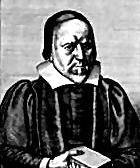
By Puritans we mean men of this sort. This group is often identified with the early ‘spiritual brotherhood’ of Richard Greenham (1531-1591), Richard Rogers (1550-1620), Henry Smith (1550-1591), John Dod (1549?-1645), Arthur Hildersham (1563-1632) and those like Richard Bernard who succeeded them prior to the later Puritan ascendancy.

20070306

Isle of Man Part 04

Isle of Man Part 4
The hue and cry thus set out, it is carried by the Spirit of supplication, crying mightily to the Lord for grace and mercy to help in time of need, as David did, who saw sin before him and then made the hue and cry, saying; Have mercy upon me, O Lord, according to thy loving kindness, according to the multitude of thy mercy do away with my offences.
This hue and cry must not be let slip at any hand, but be carried along in the pursuit, lest in following of sin, men be deceived, and solid virtues be attacked instead of vices. For this we must know, as vices have not a few friends (which shall after be showed) so virtues have many enemies ready to bear false witness against them, that they may be pursued after - malefactors, that sin in the meanwhile may seek shelter and escape, and the enemies are these:
1. One Mr Outside. On the inside a carnal securitan fellow that will come to his church, keep his Sundays and holy days; but yet in the congregation while he sitteth among others, sometimes he is nodding and sometime, fast asleep and if he abide waking then is his mind wandering abroad, so as he remained still ignorant, without any effectual power of the Word; and being out of the church, he is presently upon his worldly business or pleasure.
This fellow cannot abide any after-meditation or Christian conference with others of that which he hath heard; but tells you his parlour shall not be turned into a preaching or praying place. Christians cannot meet except in the church, but he calls their meetings conventicles, and sends the hue and cry against it as against schism. This is a vulgar ignoramus and a blockish adversary.
2. The second is, Sir Worldly Wise, a very fool to God, a self-conceited earthworm whose wisdom is from below, and therefore sensual, earthly and devilish, who proudly with much disdain, condemneth the wisdom which is from above, pure and peaceable, sincere and charitable; and is ready to tend the hue and cry after it, as after foolish and doting simplicity.
3. The third is Sir Lukewarm. This fellow is a temporising time-server, Jack on both sides, he is all in the praise of moderation and discretion, one very indifferent between this and that. He cannot endure fervent zeal, but would have hue and cry sent against it as a fiery mad-brained rashness.
4. The fourth is Sir Plausible Civil, a fashionable fellow, framed to a commendable outward behaviour for civility, but in matters of religion he hath no more but what he has by common education, custom and the example of others. To the life of religion he is a stranger. Strict serving of God and a more narrow search of our ways, he holds to be foolish scrupulosity and is desirous to have the Hue and Cry sent out against it, as against fantastical preciseness.
5. The fifth is Master Machiavel, a mischievous companion; all for policy, little for piety, and then in pretence only. He is a very Jehu, zealous against Baal, to root out Ahab's posterity, for he more sure settling of the kingdom to him and his; but in state idolatry, a very Jeroboam, to keep the kingdom from being reunited to Judah. He cannot suffer gainful abuses to be reformed; but if any attempt any such thing, be accuseth them for factious turbulent spirits, and so would he have the hue and cry made against their endeavours as against some Puritanical trick.
6. The sixth is one Libertine. This licentious fellow hath a chivalrous conscience, caring for nothing but how to pass on along his life in pleasurable contentments. Religion by him is held to be but a devised policy to keep men in awe of a Deity; and therefore when he seeth religion to be made conscience of, he presently causes hue and cry to be made against it as against hypocrisy. This profane enemy laugheth and mocketh at Christianity.
7. The seventh is Scrupolosity. This is an unsociable and snappish fellow, he makes sins to himself more than the law condemneth, and lives upon faultfinding. Weak Apprehension is his father and Misunderstanding his mother, and an Uncharitable Heart his nurse. The use of Christian liberty, if it be more in his conceit than he pleaseth to like well of, then would he haven the hue and cry sent against it as against carnal security. This is a rigid and censorious adversary.
8. The eighth is the Babbling Babylonian. This is a doting companion and superstitiously foolish. He boasteth of antiquity, though his ways be novelty; yet be will have it the old religion and if any forsake it as idolatry, those he condemneth for schismatics, and labours to have the hue and cry sent out against all reformation in Christian Churches as against heresy. This is a bigoted antichristian adversary.
These are the principal informers (for I pass by petty companions) which endeavour to mislead the pursuer of sin and to set him to attach very eminent and excellent virtues for vices. Therefore it is necessary to have sin set out by marks infallible in the hue and cry else this subtle villain sin will craftily beguile the pursuer, and will escape either by the shifts which he can make to deceive him or by his many friends he hath to keep him from being apprehended.

20070305

Faithful Shepherd 7D

An evident place of Scripture carrying the sense after the letter with proof thereof
Ecclesiastes 7:22 Surely there is no man just in the earth, that doth good and sinneth not.
Here looking upon this place and observing the words, nothing I find obscure, needing interpretation but the right sense to be as the words openly declare, for the same agrees with the analogy of faith, it being a principle taught that all men are sinners, the first petition teaching every man to ask pardon of his sins. It agreeth with the circumstances of the place, and Solomon's purpose, also with other Scriptures such as Ps 14:3, La 3:2, 1 Jn 1:8, Ro 7:19.
Therefore this and the like Scriptures delivering in the letter the true meaning, we are to proceed to instructions without searching forth of any other sense from the words, or standing upon explaining of the words, being not obscure except the rudeness of the auditory untaught in common things doth require a brief unfolding of the words as one cometh to them. For there is nothing so clear but even the main points of Christianity needeth opening (as in this place – who is a just man; what sin is and to do good) to such as be uncatechised and not instructed in the common terms of religion such as law, gospel, faith, repentance, flesh, spirit, etc.
An obscure Scripture which cannot be taken according to the letter.
Matthew 26:26 This is my body
1. The Papists exposition false and proved. In examining our expositions upon places we must first of all refer the matter to some point of catechism and after that principle of divinity proceed therein.
This is an obscure Scripture and cannot be meant literally as the Papists expound them, as if Christ had said 'This bread is my natural body, born of the virgin Mary my mother by transubstantiation', for it is absurd and too gross a conceit. Therefore we search out another sense and say as if Christ had said, indeed as he meant The bread is a sign of my body sacramentally.
Now to try out expositions we must come to the former rules. First, to confute the Papists, before we confirm our own, the matter in hand is about the sacrament (for this is ever to be marked, of what the place speaketh, so that we may refer it to some catechism point, to try the interpretation by, as places speaking of Christ, we must refer them to his nature or offices. And according unto the principles therein learned examine our expositions). Therefore we are to refer this predication to the doctrine of sacraments, where we shall find their exposition to be against the nature of a sacrament, which is a relation and not truly a substance, a sign as well as the thing signified.
Christ is not bodily in the sacrament
2. Bring it to another part of the catechism, to the creed, and we shall find it to be against two articles of the same; of Christ's true human nature, having a true body with all the dimensions, which being so, cannot be enclosed in a wafer cake. Also against Christ sitting at the right hand of his Father, which is ever true at all moment of times, but this cannot I believe if he be in the sacrament and every morning mass and so often as the sacrament is celebrated. It cannot be said that one true body can be at one instant in two places.
3. Try it by the circumstances of the place, and it is overthrown, considering who administered it, Jesus Christ, sitting at the table, and the bread in his hand, by which either must his body sitting at the table be a fantastical body, if the bread was his true body or the bread but bread, if the bread was then but bread, it was not transubstantiated, belike till after his resurrection, and in so saying the first institution should be defective, and the disciples of Christ to receive less than we do, if it be now transubstantiated. Note again, that it is called bread it and appears ever bread. Now if it were changed, it were a miracle and no miracle but it was sensible. The disciples they took it, saw Christ when they ate it, and felt no flesh. The end of a sacrament is to remember him; now we remember not things present. It is against therefore the end of a sacrament.
4. Lastly, it is against Scripture, Acts 3:21. The exposition is therefore false, too cannibal like, allowing the eating of man's flesh, which the Jews abhorred to hear of. It is false, foolish and absurd, against religion, reason, sense, and natural instinct.
Our exposition true and plainly proved
Contrariwise our exposition is true, on the contrary agreeing with the nature of a sacrament, with articles of faith, with Scripture (John 6:63, Acts 3:21) with all the circumstances of the place, and with places speaking of the like matter, in like manner, and yet no transubstantiation (Gn 17:10, 1 Co 10:4, 11:25). Therefore this must be given and the right meaning of the words.