20260718

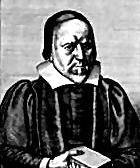
Wenceslaus Hollar

Wenceslaus Hollar, Public domain,
via Wikimedia Commons
Wenceslaus Hollar was a prominent Bohemian draughtsman and etcher based in London. He created an engraved portrait of Richard Bernard in 1641. It shows Bernard in his clerical gown and cap and served as the frontispiece for Bernard’s posthumously published biblical concordance, Thesaurus Biblicus (1644).
Wenceslaus Hollar, Public domain,
via Wikimedia Commons


20171023

New Edition of Ruth's Recompence

A new edition of Ruth's Recompence can be found here. We note

This thesis consists of annotations and an introduction which constitute an edition of Richard Bernard’s Ruths Recompence (1628). This edition aims to provide a more modern and accurate (though clarified) text than the nineteenth-century edition edited by Alexander Balloch Grosart (1865). It also sets out to offer a more comprehensive interpretation with an emphasis on a subject prominent in Bernard’s commentary passed over in silence by Grosart, that is, the issues relating to women’s conduct raised by Ruth’s approach to Boaz alone by night in Ruth chapter 3. The text of this edition has been produced by applying Optical Character Recognition to a copy of the 1628 edition in my possession. In presenting the text, an editorial policy has been consistently followed, which is described in the Textual Introduction. The main objective is to reproduce the original as closely as possible at the same time as making the work accessible to the modern reader. In the early modern period much was written about women’s conduct and how they ought to behave. Ruths Recompence provides a specifically puritan perspective on this issue. In the introduction, various kinds of literature about women in the early modern period, such as conduct books and lives of women, are surveyed in order to show the context in which Bernard addressed the conduct of Ruth and Naomi. The editorial framework also analyses Bernard’s developing and to some extent censorious evaluation of the women’s behaviour. Another subject relating to women’s conduct addressed, chiefly in the introduction, is breast-feeding. Bernard’s views are related to those expressed by the preceding commentator on Ruth, Edward Topsell, and by a contemporary woman – the Countess of Lincoln. The editorial framework draws on the work of commentators on Ruth preceding Bernard, in the ancient and medieval as well as the early modern periods. This reference to previous commentators is a significant part of the edition because it shows where Bernard’s views are original. In the introduction biographical information about Bernard himself, in particular, and also the earlier commentators is provided. A tradition of commentaries on Ruth is thus depicted. It is argued that Bernard’s significant contribution to this tradition is his application of his own theory of preaching, set out in his The Faithfull Shepheard (first edition 1607), to Ruths Recompence. The present edition interprets various other aspects of the commentary, in particular, those relating to Bernard’s theological position as a puritan clergyman who was involved with separatism early in his career but later published attacks on separatists and conformed uneasily with the Church of England. In the commentary, he criticises Roman Catholicism, and expresses views on providence, predestination and the Anabaptists. These subjects are commented on in the editorial framework. Other subjects to which this edition draws the reader’s attention include Bernard’s repeated reference to hierarchy in society and his admiration of the simple, primitive legal system depicted in Ruth. The introduction concludes with a glance at modern feminist scholars’ writing on Ruth. The present edition aspires to make a contribution to feminist interpretations of the early modern period, and it can be recognised that many of the feminist features perceived in the biblical narrative by modern scholars are far from the concerns of Bernard, who was in most respects a typically patriarchal clergyman of his time.

Richard Bernard and His Publics

A PhD thesis on Bernard appeared in 2015 Richard Bernard and His Publics: A Puritan Minister as Author. It is by Amy Gant Tan and the thesis was submitted to Vanderbilt University in Nashville. It can be accessed here.

20091221

Quotations


Quotations from Leland Ryken's "Worldly Saints"
Page 2
Christians "may be merry at their work, and merry at their meat" (From the Isle of Man)
Page 93
"common people respect more a preacher's life than his learning"
Page 249
He opposed any interpretation that did not with fundamental certainties. No exposition of any text, therefore, is right which does not "agree with the principles of Religion, the points of Catechism set down in the Creed, the Lord's Prayer, the Ten Commandments and the doctrine of Sacraments." (From Faithful Shepherd)
Page 251
To refuse to work is "contrary to God's injunction that men should labour, contrary to the practice of all the godly ... Let him or they whosoever, which think themselves religious indeed, make conscience to take pains in some calling and beware of living idly." (From Ruth's Recompense)

20090505

Quotation Psalms

"there is no condition of any in prosperity or adversity, peace or wars, health or sickness, inward or outward distress, with many particular causes in all these kinds, but he shall find some Psalms, which he may think almost to have been composed upon his own occasion"
From Preface to the Reader, David[']s Music[k]

20090112

Publications 30


Title: Thesaurus Biblicus seu Promptuarium sacrum Whereunto are added all the marginall readings, with the words of the text, and many words in the text expounded by the text, all alphabetically set downe throughout the Bible. In the end is annexed an abstract of the principal matters in the Holy Scripture. By Richard Bernard, late rector of Batcombe. See the contents and use of all, in the Epistle to the reader. Imprint: Imprinted at London: by Felix Kingston, for Andrew Crooke at the Signe of the Greene-Dragon in Paules Church-Yard, 1644. Date: 1644 Pages: [492] p
Copy from: Newberry Library
Notes: Frontis. portrait (A1v) of the author signed: W: Hollar Bohem, ad viuum del: Londini. Ie Wenceslaus Hollar (1607-1677). Signatures: A-2S6. Leaf 2S6 is blank. Another edition appeared the same year and also in 1661. The wiork contains a five page introduction by Bernard himself which is preceded by a three page one by John Conant (1586-1653). He was (from 1619) the rector of Lymington in Somerset.

Publications 29

Title: Certaine positions seriously to bee considered of shewing the danger of doing any thing in and about the worship of God that hath not warrant from his written word ... / written by Mr. Richard Barnard.
Imprint: [London]: Printed for Giles Calvert, 1644.
Date: 1644
Pages: 38 p
Copy from: National Library of Scotland
Notes: Imperfect: Text begins with p 17

Publications 28

Title: The Bibles abstract and epitome the capitall heads, examples, sentences, and precepts of all the principall matters in theologie: collected together for the most part alphabetically, with the doctrine and uses compendiously explained of all the chiefe points therein contayned: taken out of the best moderne divines, both reverend and learned/pro Richardo Barnardo.
Imprint: London: by G. M. for Andrew Crooke, 1642.
Date: 1642
Pages: 176, [2] p
Copy from: Henry E Huntington Library and Art Gallery
Notes: Includes index

20080922

Publications 27

Title: An epistle directed to all iustices of peace in England and Wales
Imprint: London: Printed for M. S., 1642.
Date: 1642
Pages: 16 p
Copy from: Thomason Collection, British Library and Henry E. Huntington Library and Art Gallery
Notes: Warning the justices of the dangers of Catholics in England.

Publications 26

Title: A short vievv of the praelaticall Church of England vvherein is set forth the horrible abuses in discipline and government: layd open in ten sections by way of quaere and petition to the high and honourable court of Parliament: the severall heads whereof are set downe in the next two pages: newly corrected with additions: together with a short draught of church-government. 1641.
Date: 1641
Imprint: London : Printed by Jo. Beale for Thomas Underhill, and are to be sold at his shop
Pages: 4, 43 p
Copy from: Thomason Collection, British library
Notes: A short preface is addressed to parliament. Further editions of what already appears to be a further edition already appeared in 1641 and then later again in 1661 (where he is called John Barnard) with an anatomy of the common prayer added. It is not clear whether Richard Bernard held such views upon episcopacy in 1641. This work may have been by John Bernard, a Presbyterian, author of The Independents catechisme. 1645. Cf. Emanuel Green, Bibliotheca Somersetensis. 1902. v. 2, p. 165.

Publications 25

Title: The article of Christs descension into hell fully in the true sense thereof layd open by Richard Bernard, pastor of the church at Batcombe
Date: 1641
Imprint: London: Printed by Jo. Beale for Thomas Underhill, and are to be sold at his shop in woode street at the sign of the Bible near the Counter, 1641.
Pages: [6], 39 p
Copy from: British Library
Notes: There is a brief dedication to "The right worshipful and worthily honoured Sir Charles Barkeley Knight" and heartily wishing him all true happiness. This is the Somerset based royalist Sir Charles Berkeley, later 2nd Viscount Fitzhardinge of Berehaven, who died in 1668. He was the husband of Penelope Godolphin.

20080630

Publications 24

Title: The ready way to good works, or, A treatise of charitie wherein, besides many other things, is shewed how wee may bee alwayes readie, and prepared both in affection and action to give cheerefully to the poor and to pious uses never heretofore published. By Richard Bernard, rector of the Parish of Batcombe in Sommersetshire.
Date: 1635
Imprint: London: Printed by Felyx Kyngston, and are to be sold by Edward Blackmore, at the signe of the Angell in Pauls Church-yard, 1635.
Pages: [22], 486, [6] p
Copy from: Emmanuel College Library (University of Cambridge)
Notes: There is a 4 page dedicatory epistle beginning "to the worthily honoured Sir John Wray and to his vertuous lady, all true happiness here and in heaven". Another seven page one is "To the right worshipful George Stroud, Esquire, and William his brother". This is George Strode (1583-1663) who later came to prominence a a royalist in the civil wars. There were several William Strodes. This William Strode (1562-1637) was an MP, one of the five members impeached by Charles I and quite different to his younger brother in his views. ODNB calls him "‘godly’ and anti-episcopal" in his "religious views" and notes "his assertion of parliamentary authority over prerogative and his political friendship for the Scots".
A further six pages describe the book's contents, which are in 24 short chapters.

20080428

Shorter Catechism - Sanctification

Of Sanctification

Q. How may it appear,that you have this faith and also these benefits?
A. By my sanctification
Q. Who doth sanctify you?
A. The Holy Ghost Rom 15:16
Q. What is sanctification?
A. It is a making new of the whole man whereby he daily dieth to sin and increaseth in holiness and righteousness Eph 4.23, 24 Gal 5:24 1 Thess 4:1
Q. What grace proceeds from this sanctification?
A. True repentance leaving that which is ill with hatred and performing new obedience with gladness of heart continually Jer 31:19, Acts 26:20, Pss 119:10, 115, 136, etc
Q. What estate now stand you in being sanctified and penitent?
A. I am in the blessed estate of grace wherein if I continue I shall inherit eternal life Tit 3:4, 5:6, 7, Rom 11:22, Matt 10:22, 2 Tim 4:8
Q. Why hath God made, redeemed, sanctified and hitherto preserved you?
A. To serve him truly all the days of my life Eph 2:10, Tit 2:11, 12, Lk 1:74, 75
Q. How must God be served?
A. Only after his will revealed in his written word, Deut 30:8, 10 and 4:2, 2 Cor 4:6

Publications 23

Title: Christian see to thy conscience or a treatise of the nature, the kinds and manifold differences of conscience, all very briefly, and yet more fully laid open then hitherto by Richard Bernard, parson of Batcombe in Somersetshire. Anno 1630.
Imprint: London: Imprinted by Felix Kyngston for Edward Blackmore, and are to be sold at his shop in Pauls Churchyard at the signe of the Angell, 1631.
Date: 1631
Pages: [38], 408 [ie 416], [4] p
Notes: Pages misnumbered at end. T5 and T6 probably blanks. Folger Shakespeare Library catalogue. Reproduction of the original in the British Library.
Copy from: British Library
There is a 9 page dedication in Latin addressed to the reverend father in Christ the then Bishop of Bath and Wells, Walter Curle. Curle, a friend of Laud, lived 1575-1647 and was Bishop of Bath and Wells 1629-1632, following a year as Bishop of Rochester. He was Bishop of Winchester 1632-1647. This is followed by an 8 page dedication in English "To the right worshipful and worthily honoured Sir Robert Gorge, Knight. And to his truly religious lady, the peace of a good conscience here, with the perfection of blessednesss hereafter." This is Robert Gorges (1588-1648). One of four brothers, his mother Helena had been a Swedish noble woman and a lady-in-waiting at the court of Elizabeth I. His seat was Redlynch, Somerset. A further eight pages describe the book's contents, which are in 54 short chapters.

20080201

Publications 22

Title: The Bible-battells. Or The sacred art military For the rightly wageing of warre according to Holy Writ. Compiled for the vse of all such valiant worthies, and vertuously valerous souldiers, as vpon all iust occasions be ready to affront the enemies of God, our king, and country. By Ric. Bernard rector of Batcombe Somersetshire.
Imprint: [London]: Printed [by W. Jones] for Edward Blackmore, and are to be sold by Iames Boler at the signe of the Flowre de Luce in Paules Church-yard, 1629.
Date: 1629
Pages: [24], 273, [1]
Library: Central Library, Bristol
Notes: Imperfect; tightly bound affecting text; pages 269-70 cropped affecting text (pages from Bodleian library copy filmed at end). This highly topical work is prefaced by a six page dedication to the King and another 11 pages addressing the reader.

20080103

Publications 21

Title: Ruths recompence: or a commentarie vpon the booke of Ruth wherein is shewed her happy calling out of her owne country and people, into the fellowship and society of the Lords inheritance: her vertuous life and holy carriage amongst them: and then, her reward in Gods mercy, being by an honourable marriage made a mother in Israel: deliuered in seuerall sermons, the briefe summe whereof is now published for the benefit of the Church of God. By Richard Bernard
Imprint: London: Printed by Felix Kyngston, and are to be sold by Simon Waterson, 1628.
Date: 1628
Pages: [8], 479, [1]
Copy from: Henry E Huntington Library and Art Gallery
There is a dedication of just over four pages "To the right honourable and very vertuous Lady, the Lady Frances, Countess of Warwick, Dowager". This is again Frances Wray (d 1634) sister of Isabel who was married first to Sir George St Paul of Snarford (c 1562-1613) but then became the second wife of Robert Rich, the first Earl of Warwick (1559-1618) two years before his death.

20071224

Publications 20

Title: A guide to grand-iury men diuided into two bookes: in the first, is the authors best aduice to them what to doe, before they bring in a billa vera in cases of witchcraft, with a Christian direction to such as are too much giuen vpon euery crosse to thinke themselues bewitched. In the second, is a treatise touching witches good and bad, how they may be knowne, euicted, condemned, with many particulars tending thereunto. By Rich. Bernard.
Prov 17:15, Deut 13:14
Imprint: London: Printed by Felix Kingston for Ed. Blackmore, and are to be sold at his shop at the great south dore of Pauls, 1627.
Date: 1627
Pages: [20], 267, [1]
Copy from: British Library
The book was reprinted in 1629 adn 1630.
The work is preceded by a 4 page dedication to 'The right honourable Sir John Walter, Knight, Lord chief Baron of his majesties court of exchequer and Sir John Denham, Knight, a worthy Baron of the same honourable court. The reverend and religious judges in this western circuit.' and another, slightly longer, 'To the right worshipful Gerard Wood, Doctor of Divinity, and Archdeacon of Wells and Arthur Duck, Doctor of the Civil Law and Chancellor to the Right Reverend Father the Lord Bishop of Bath and Wells' . There is also a six page sumary of the work after this.
John Walter lived 1565-1630, a judge and politician. An anecdote from Fuller says that when a colleague on the western circuit remarked ‘My Lord, you are not merry’, Walter supposedly replied ‘Merry enough, for a judge’. John Denham, father of the poet, lived 1559-1639. Wood became archdeacon in 1611, Duck lived 1580-1648.

20071205

Publications 19

Title: Rhemes against Rome: or, The remoouing of the gagg of the new Gospell, and rightly placing it in the mouthes of the Romists, by the Rhemists in their English translation of the Scriptures. Which counter-gagg is heere fitted by the industrious hand of Richard Bernard ...,
Imprint: London: printed by Felix Kingston, for Ed. Blackmore, and are to be sold at his shop at the great south doore of Pauls.
Date: 1626
No. pages: [16], 326 p.
Copy from: Cambridge University Library
The work is preceded by a four page dedication 'to the right worshipful and worthily honoured Sir Ralph Hopton, Knight of the Bath' and a four page advetisement for the Christian reader. Hopton lived 1598-1652. He was a west country MP and later played a prominent role in the civil wars.

20071106

Publications 18

Title: The isle of man: or, The legall proceeding in Man-shire against sinne. Wherein, by way of a continued allegorie, the chiefe malefactors disturbing both church and commonwealth, are detected and attached; with their arraignement, and iudiciall tryall, according to the laws of England.: A necessarie direction for waifaring Christians, not acquainted with those perillous wayes they must passe, before they happily arriue at their wished hauen. / By R.B. ...
Imprint: London,: Printed for Edw. Blackmore, at the great South doore of Pauls., 1626.
Date: 1626
Pages: [24], 287 p.
Notes: Dedication signed: Richard Bernard. Signatures: A-N12 (N12v blank). Marginal notes. Error in paging: p. 263 misnumbered 236.
Copy from: Folger Shakespeare Library
This is the first extant edition of at least 10 produced in Bernard's life time. Editions appeared in
1626, 1627 [2], 1628, 1629, 1630, 1632, 1634, 1635 and 1640 (all London). Subsequent editions appeared (all London unless otherwise marked) in 1648, 1658, 1659, 1668, 1674 (Glasgow), 1677 [2], 1683, 1719 (Boston), 1778 (Liverpool), 1803 (Bristol), 1851, 1976 and 1997.
The work is preceded by an 8 page dedication 'To the right worshipful Sir Thomas Thynne, knight, and to his religiously affected lady, the Lady Catherine Thinne' and one to the reader twice as long.
Sir Thomas Thynne was born before 1599 and was the son of Sir John Thynne and Joan Hayward. Catherine Lyle-Howard was his second wife. She was the daughter of Hon Charles Lyle-Howard.

20071101

Publications 17

Title: Looke beyond Luther: or An ansvvere to that question, so often and so insultingly proposed by our aduersaries, asking vs; where this our religion was before Luthers time? VVhereto are added sound props to beare vp honest-hearted Protestants, that they fall not from their sauing-faith. By Richard Bernard, of Batcombe in Sommersetshire.
Imprint: London: imprinted by Felix Kyngston, and are to be sold by Edmund Weauer, at his shop, at the great North-doore of Pauls, 1623.
Date: 1623
No. Pages: [8], 56 p.
Copy From: Folger Shakespeare Library. Copies also in Harvard University Library and British Library and second edition in Yale University Library.
The work is preceed by a four page dedication 'To the right worshipful Sir Walter Erle, Sir Clement Cotterel, knights, and to their virtuous Ladies'. Erle (1586–1665) was a politician 'renowned for his staunchly Calvinist religious views'. Cottrell is less well known.